dayanagt.ux@gmail.com
SaaS Landing Page for Productivity Dashboard & Mobile App
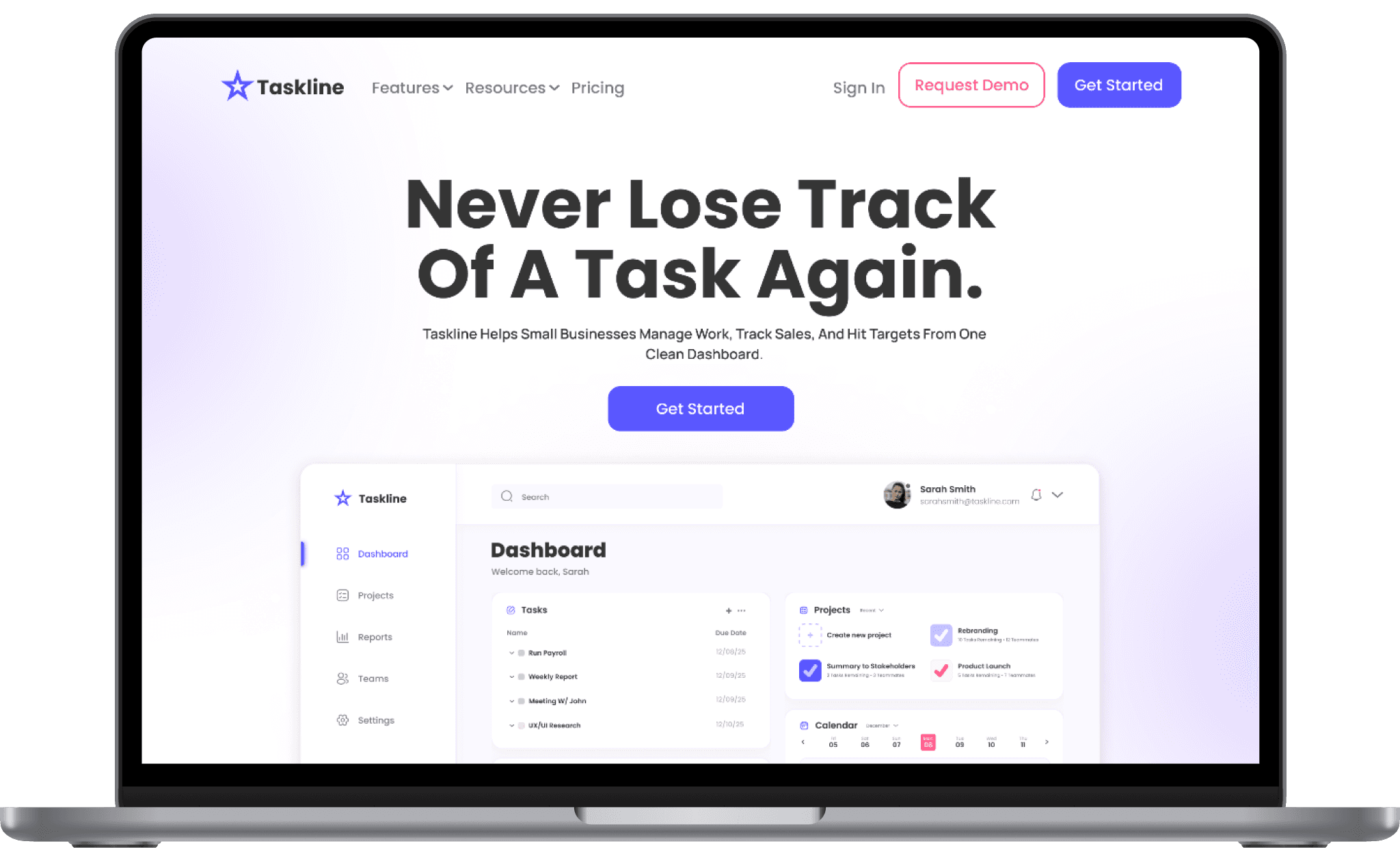
This project explores how a high‑impact SaaS landing page can effectively communicate a productivity platform’s value proposition, articulate key features, and drive user acquisition — serving both Desktop Dashboard and Mobile App experiences under one unified narrative.
Project Type
Concept / Portfolio Case Study
My Roles:
UX/UI Design
UX/UI Design
Information Architecture
Content Strategy
Researcher
Visual Design Direction
Product Owner
Case Study Sections:
Defining the Problem
Competitive Analysis
Journey Map
Wireframes
Results
In today’s productivity stack landscape, users encounter dozens of competing offerings, many with similar feature lists. Without a clear, user‑centered landing experience, even well‑designed products fail to:
Differentiate value
Communicate how they solve real user problems
Convert visitors into sign‑ups or engaged users
The challenge was to design a landing experience that:
Clearly communicates who the product is for
Highlights how it solves users’ pain points
Guides visitors toward sign‑up and onboarding
Represents both desktop and mobile experiences within a cohesive narrative
This required strategic structuring, intentional messaging, and design decisions that align with business goals.
Defining the Problem
Research
Strategy & Guiding Principles
To design a landing page that feels intentional and conversion‑optimized, the following principles drove decisions:
Clarity Over Features
Prioritize communicating problems solved over long lists of technical features.
User‑First Messaging
Lead with user goals and outcomes, not product specs.
Action‑Driven Structure
Design sections that logically guide visitors from awareness → understanding → action.
Mobile & Desktop Dual Focus
Showcase how the solution works both on the web dashboard and on mobile without overwhelming the reader.
Competitive Analysis
Competitive analysis revealed strong SaaS pages lead with outcome-oriented value propositions, segmented benefit statements, and strategically placed CTAs. These insights informed our landing page structure: a focused hero with compelling value, clearly scoped features with benefits first, and repeated, visible CTA prompts throughout.
The Good
The Bad
01
Strong Visual Hierarchy
Clean, organized layouts make content easy to scan and important information easy to find.
02
Compelling CTAs
Prominent, persuasive CTAs guide users toward sign-ups or trial starts.
01
Clarity of Value Proposition
The product’s purpose and benefits aren’t immediately clear to visitors.
02
Information Overload
Too much content or feature detail can overwhelm visitors and reduce engagement.
The Design Process
Decisions, Tradeoffs & UX Rationale
Value Proposition First
Decision: Introduce the product with a clear headline + subheadline communicating who it’s for and what it does.
Why: Users decide in seconds whether to stay or leave — the top of page must answer “Is this relevant to me?” immediately.
Tradeoff: Reduced technical jargon in favor of outcome‑focused language.
Problem → Solution Narrative Flow
Decision: Structure content to lead with common productivity pain points (e.g., fragmented workflows, context switching, lost visibility) followed by the platform’s solution.
Why: Beginning with shared problems builds empathy and early alignment with visitors’ needs.
Tradeoff: Feature details were deferred until the user is already oriented.
Dual Context Sections
Decision: Create sections that explicitly highlight both the Dashboard and Mobile App benefits.
Why: Users today expect both web and mobile support; showcasing them side by side improves perceived product completeness.
Tradeoff: Needed careful visual hierarchy to avoid overwhelming visitors.
Social Proof & Trust Elements
Decision: Include customer trust cues, and benefit‑oriented statements.
Why: Trust signals are proven to increase conversion, especially in SaaS where sign‑ups often require commitment.
Tradeoff: Kept social proof concise to preserve scanning behavior.
Intentional Call‑To‑Action Placement
Decision: Place CTAs at logical narrative breakpoints (hero, after features, at bottom).
Why: Multiple opportunities to convert without being repeated in a spammy way.
Tradeoff: Balanced between visibility and cognitive overload.
Journey Map
The journey map highlighted critical friction points: visitors scanned the page for why this matters before how it works. This guided us to reorganize content so that value messaging appeared first, reducing cognitive load and aligning attention toward conversion actions.
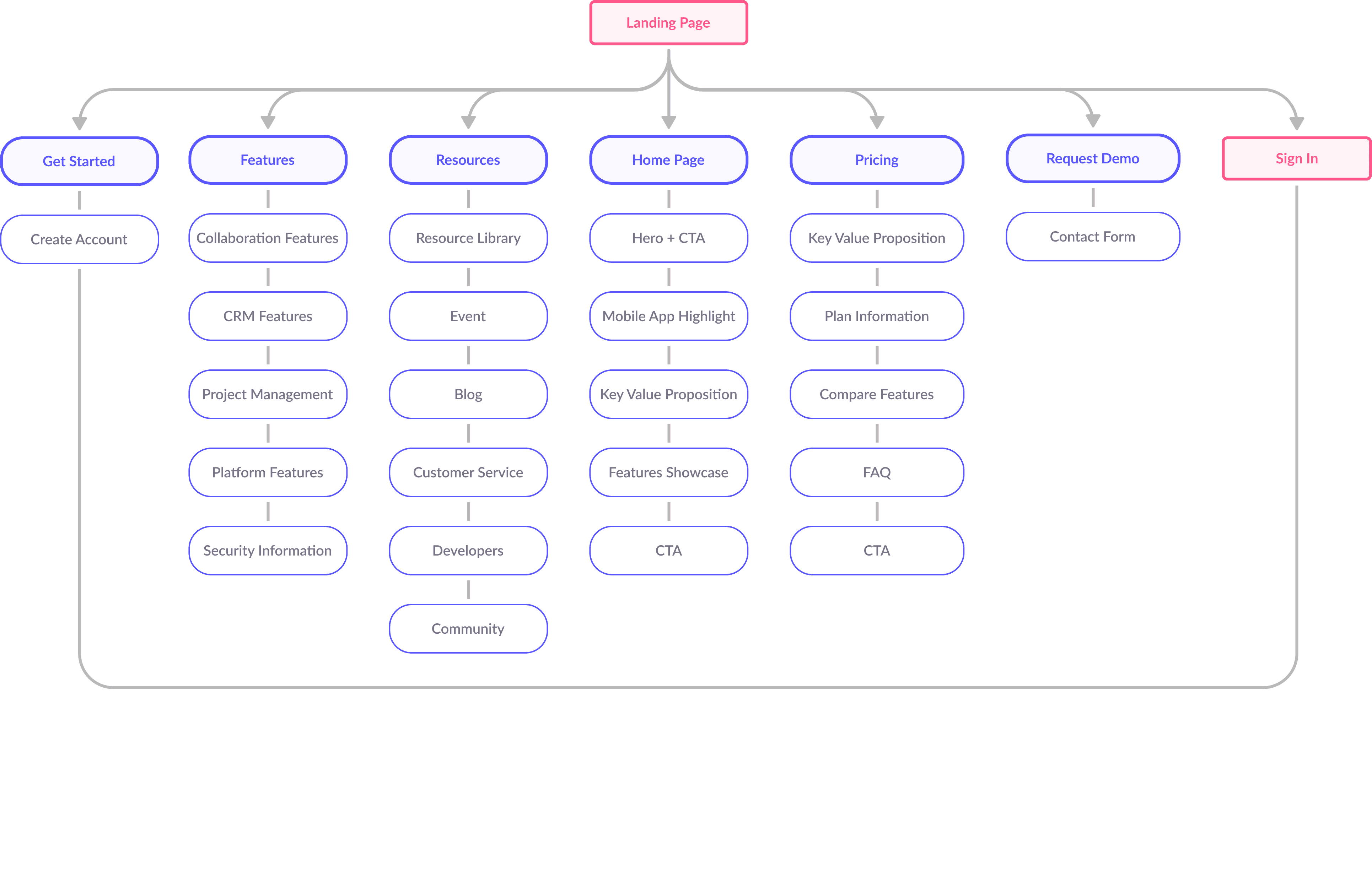
Structured CTAs to align with user attention flow:
Top hero CTA emphasizes sign-up
Mid-page CTAs reinforce feature benefits
Final CTA invites users to engage after understanding value
Each CTA copy was crafted to reduce hesitation and focus on clear next steps.
Wireframe
Iterative wireframes focused initially on content hierarchy and CTA placement. We tested multiple layouts to optimize flow from awareness → interest → action, gradually reducing informational noise and increasing conversion clarity.

Mobile App Call Out
Showcase
Why Us & Learn More
CTA
Hero Section + CTA (Dashboard Forward)
Results
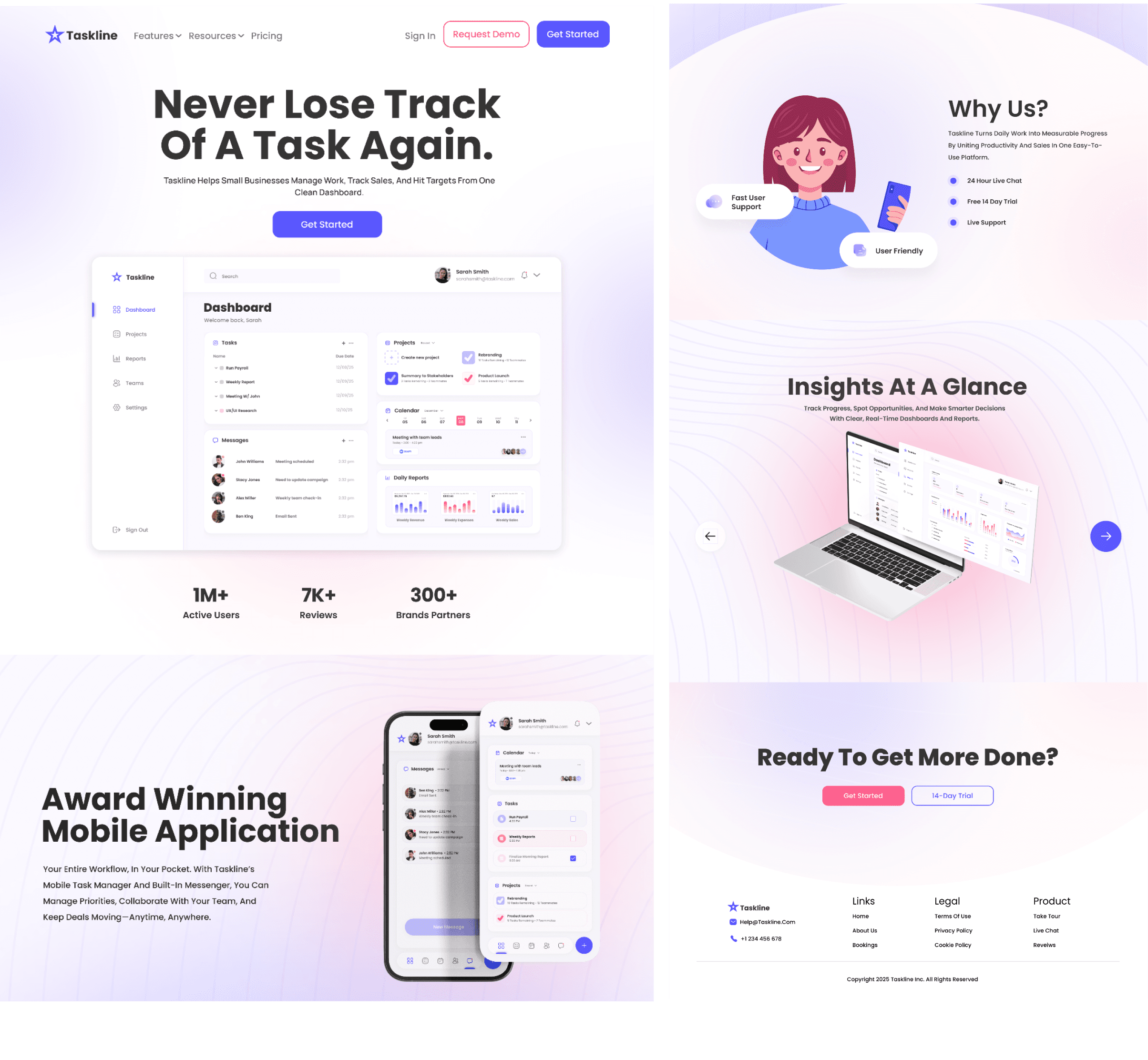
Clear Value Proposition: Revised hero messaging increased clarity around product benefits and reduced visitor confusion.
Optimized Conversion Flow: Intuitive layout and CTAs guide users through stages of engagement, designed to improve sign-up actions.
Credibility & Trust: Consistent branding and messaging reinforce trust — an important signal in SaaS user decisions.
Future-Ready Structure: The landing page architecture supports A/B testing and marketing growth campaigns.
Impact & Projected KPIs
Because this is a conceptual SaaS landing page, outcomes are framed as intent‑driven KPIs tied to design decisions.
Design Decision
Clear top‑of‑page value proposition
Problem → solution narrative
Dual Dashboard + Mobile articulation
Strategic CTA placement
Trust elements
Intended Outcome
Reduce first‑impression confusion
Increase alignment with user needs
Communicate platform completeness
Drive action at key moments
Build credibility
Projected KPI
Higher time on page, lower bounce rate
Improved engagement with features section
Higher click‑through to both platform onboarding
Increased signup rate
Higher conversion on first visit
Validation Plan
Success would be assessed through A/B testing landing section variants, heatmap and scroll tracking to observe engagement depth, and conversion funnel analytics (page views → sign‑ups → first action completed). Qualitative feedback from early users would refine copy clarity and CTA effectiveness.
Reflection & Next Steps
For future iterations, I would prioritize:
A/B testing headline variations for optimal resonance
Copy refinement based on session recordings and scroll depth
Segmented flows for different personas (e.g., team leads vs individuals)
Personalized UX based on referral sources or use cases
This reflects a product feedback loop mindset — essential for SaaS success.
All rights reserved by Dayana Gonzalez Theresine